
Your Vagus Nerve Is Running the Show (Whether You Know It or Not)
You have probably noticed that stress does not stay in your head. Your stomach tightens before a hard conversation. Your shoulders lock up after a long week. Your body holds things your mind has not fully processed yet.
That connection between what you feel emotionally and what you experience physically is not coincidence. A large part of it traces back to one nerve: the vagus nerve.
What Is the Vagus Nerve?
The vagus nerve is the longest nerve in your body. It runs from your brainstem down through your neck, chest, and abdomen, touching nearly every major system along the way. Heart. Lungs. Gut. Immune response. It is the body's main line of communication between your brain and everything below it, carrying signals in both directions.
Think of it less like a switch and more like a highway. Information travels up and down it constantly, shaping how safe or threatened your system believes you are at any given moment.
It Governs More Than You Think
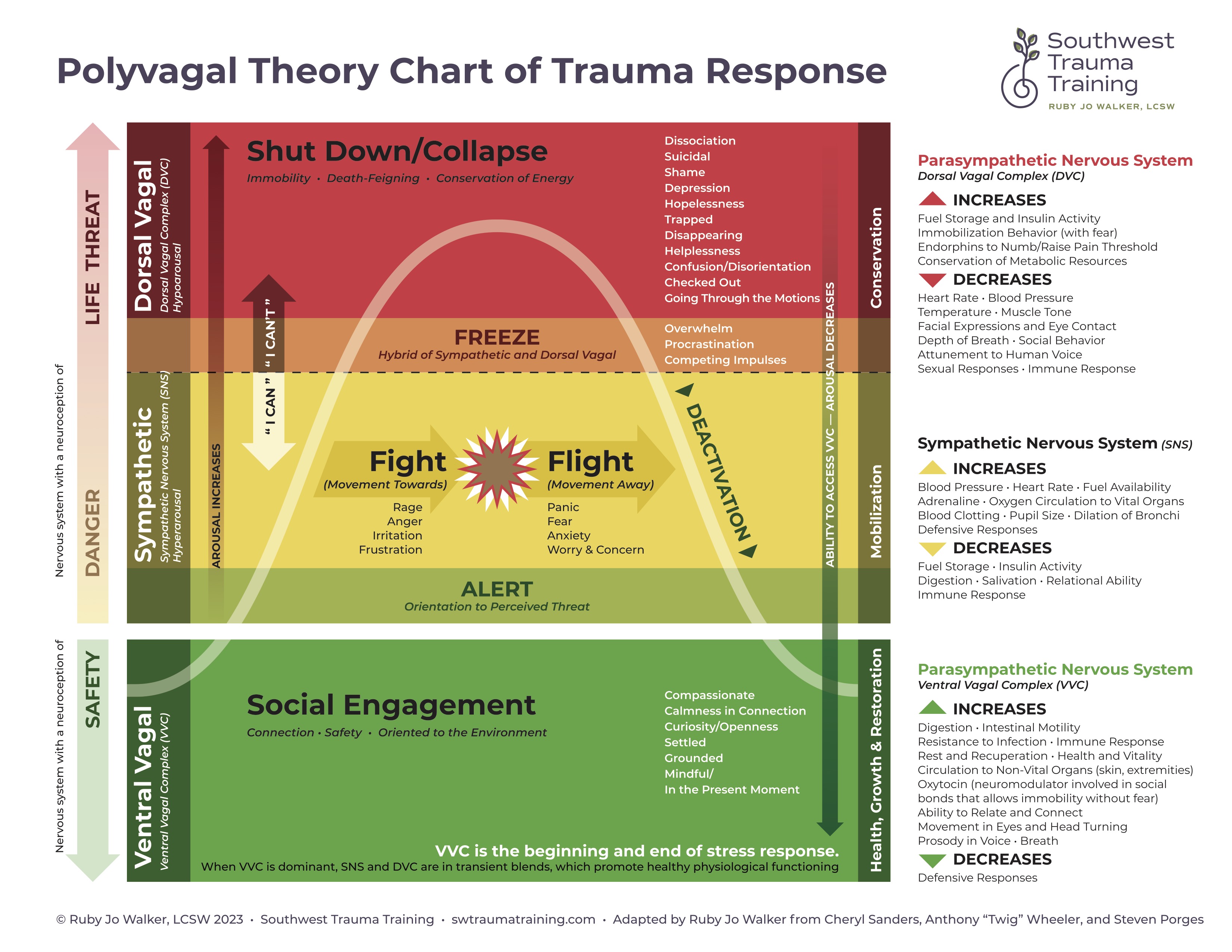
The vagus nerve plays a central role in several of your body's most essential functions.
When your nervous system perceives danger, it activates fight-or-flight responses: elevated heart rate, shallow breathing, muscle tension, heightened alertness. The vagus nerve is deeply involved in how quickly your system enters that state and, just as importantly, how quickly it can come back down from it.
It also regulates digestion. When vagal tone is low, meaning the nerve is not functioning with much flexibility or responsiveness, digestion slows and the gut becomes dysregulated. Many people who carry chronic stress notice this in their bodies long before they connect it to their nervous system.
Inflammation is another area where the vagus nerve has significant influence. It helps regulate the body's inflammatory response, which means that when vagal tone is poor, the body can have a harder time managing chronic inflammation. This has implications not just for physical health but for mood, focus, and emotional resilience.
And then there is emotional regulation. The vagus nerve is central to what researchers call the window of tolerance, the zone in which you can process emotions, connect with others, and function without becoming overwhelmed or shut down. When your vagal tone is strong, you can move through hard feelings without being swept away by them.
You Can Actually Influence It

Here is something that often surprises people: the vagus nerve is not something that just happens to you. You have real capacity to affect it, both from the outside and from the inside.
External stimulation includes things like slow, diaphragmatic breathing, humming, gargling, cold water exposure to the face, and gentle movement. These activate the nerve directly and can shift your system toward a calmer, more regulated state relatively quickly. Breath is one of the most accessible tools you have. A slow exhale, longer than your inhale, signals to your nervous system that you are safe. There are also wearable tools designed to support vagal stimulation externally, such as Pulsetto.
Internal influences are less talked about but just as real. Your thoughts, beliefs, and inner narratives shape your nervous system's sense of safety. A mind that is constantly bracing for disappointment, running worst-case scenarios, or holding deep shame will keep the body in a low-grade state of threat. This is not a character flaw. It is physiology. And it is also why healing at the level of thought, belief, and story matters so much for whole-body wellness.
This is part of why at Vivify, we approach care the way we do. Working with the nervous system is not separate from working with the heart, the mind, or the spirit. They are all in conversation with each other.
Want to see some of these techniques in action? Watch this quick video.
Healing Involves the Whole System
When people come to therapy carrying anxiety, chronic stress, relational pain, or trauma, their nervous systems are often working overtime. They are not choosing to feel dysregulated. Their bodies have learned to stay on alert as a form of protection.
Healing means helping the system learn, slowly and safely, that it can rest. That it can connect. That it does not have to stay in survival mode.
Understanding the vagus nerve is one part of that process. It gives language to what so many people already feel in their bodies but cannot quite name.
You Do Not Have to Figure This Out Alone
If you find yourself stuck in patterns of anxiety, emotional overwhelm, or physical tension that nothing seems to touch, your nervous system may be asking for more support than self-help tools alone can offer.
The team at Vivify Counseling and Coaching works with the whole person, including the body's role in healing. If you are ready to take that next step, we would love to walk alongside you.
Want to go deeper? Download our guide on resourcing yourself through art, movement, and vagal nerve connection.